

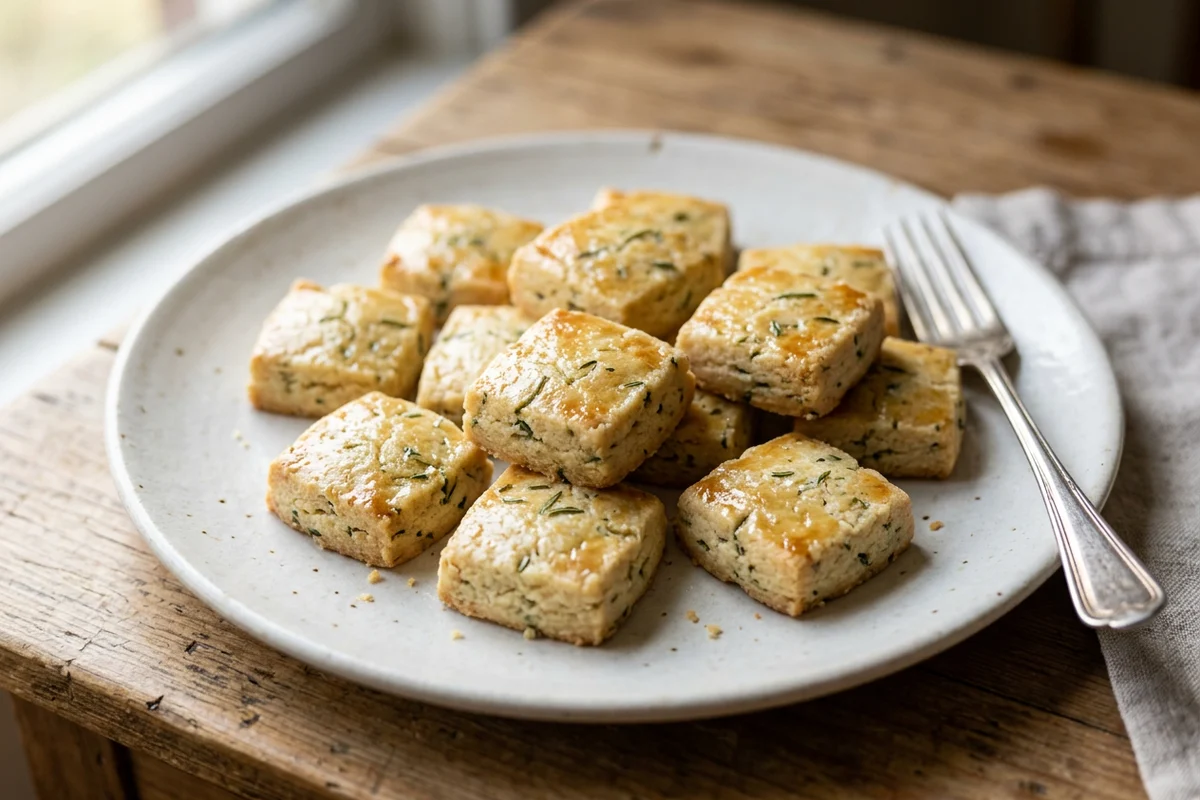
Rosemary shortbread cookies balance sweet and savory flavors in a small, buttery bite. Fresh herbs are mixed directly into a basic powdered sugar and butter dough.
The dough needs a few hours in the fridge to firm up before baking. Once the squares come out of the oven, they get a generous coating of extra-virgin olive oil while they are still hot.
Why is Rosemary Shortbread Cookies a Must-Try?
Rolling the dough between two sheets of plastic wrap creates an even thickness without adding extra flour.
Chilling the rolled dough for at least three hours prevents the cookies from spreading in the oven.
Brushing the baked shortbread with olive oil while hot allows the oil to soak deep into the crumb.
Ingredients for Rosemary Shortbread Cookies
• Unsalted butter: Make sure the butter is at room temperature so it creams smoothly with the sugar.
• Powdered sugar: Sifting the sugar removes lumps and keeps the dough texture fine and light.
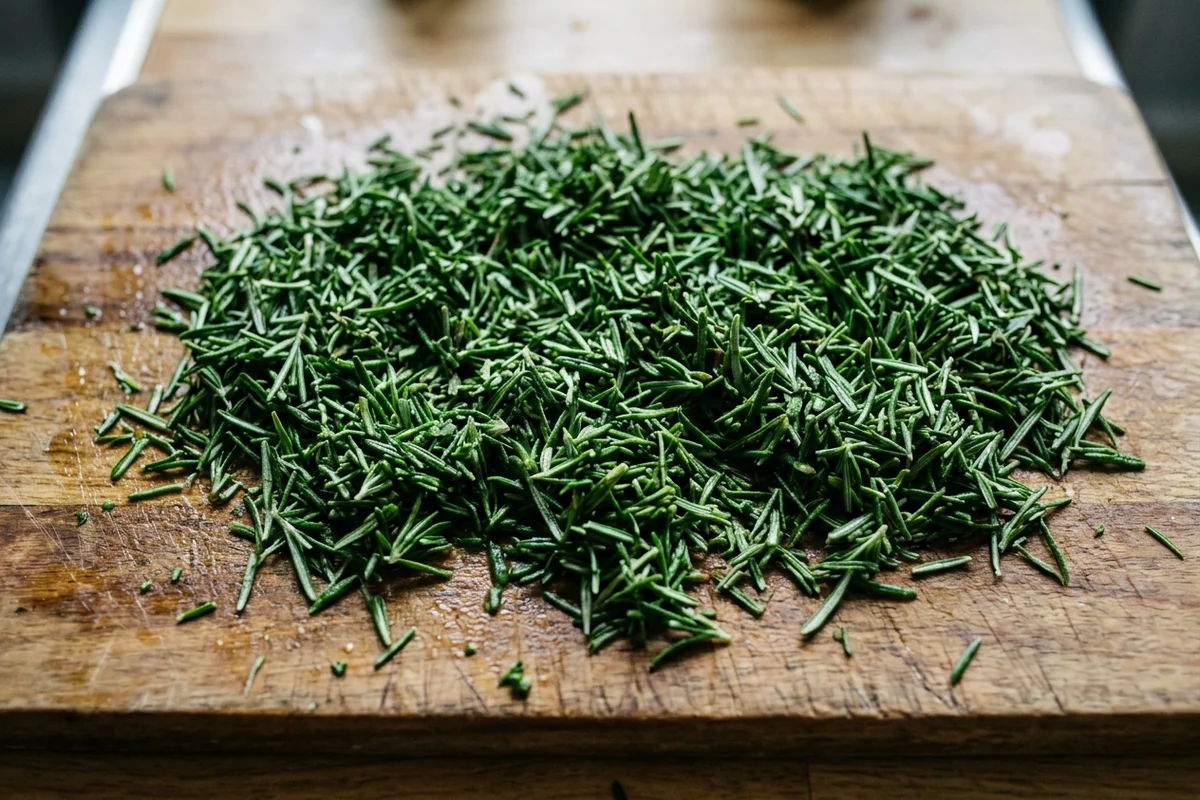
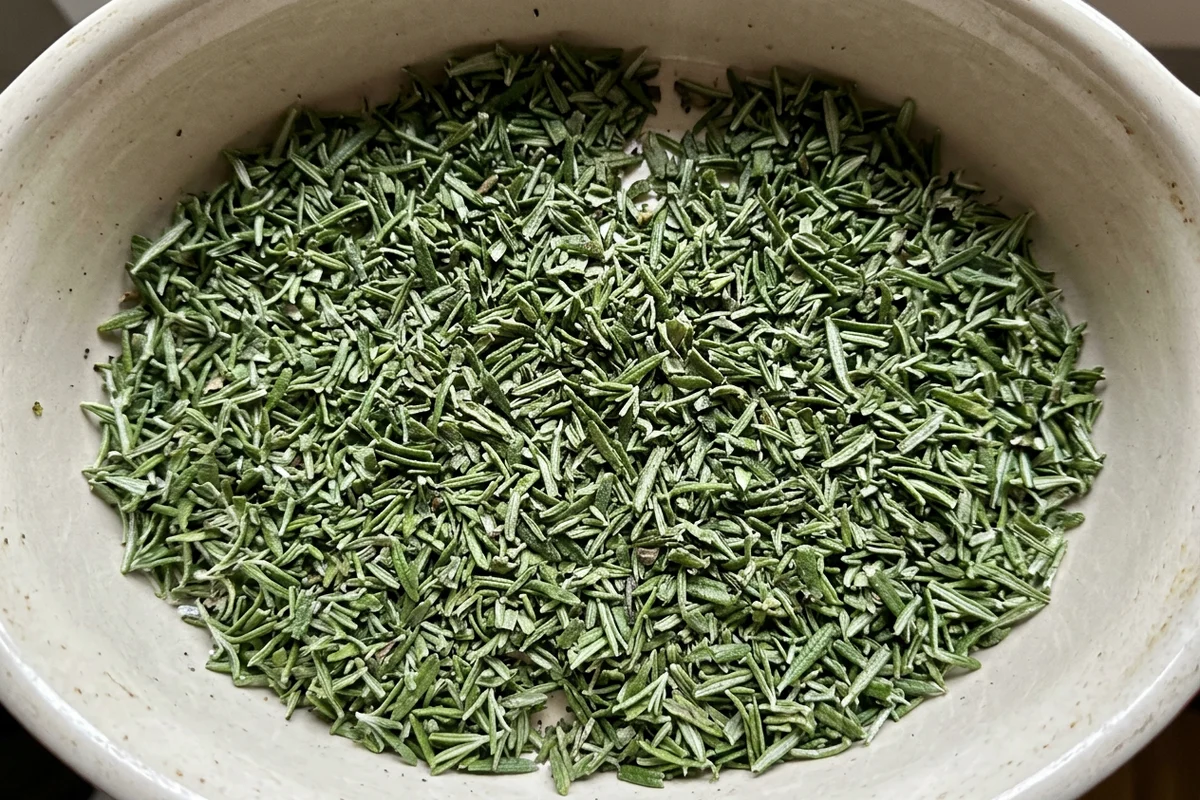
• Fresh rosemary: Mince the rosemary as finely as possible so the flavor distributes evenly. Avoid using dried rosemary.
• Kosher salt: This balances the sweetness. If you use standard table salt, cut the amount in half.
• All-purpose flour: Sifting the flour helps create a tender shortbread crumb.
• Extra-virgin olive oil: Choose a high-quality oil with a flavor you enjoy, as it is the final coating on the cookies.
Exact quantities are in the recipe card below.
How to Make Rosemary Shortbread Cookies
Step 1: Make the dough
Beat the butter until it is smooth. Add the powdered sugar, fresh rosemary, and salt, mixing until the dough is light and fluffy. Gently mix in the sifted flour just until no dry streaks remain.
Step 2: Roll and chill
Gather the dough and place it on a large piece of plastic wrap. Cover it with another piece of plastic wrap and use a rolling pin to form an even rectangle. Chill the dough in the refrigerator until it is very firm.
Step 3: Cut and bake
Slice the firm dough into small squares and space them evenly on a baking sheet. Bake until the edges turn golden brown.
Step 4: Finish with oil
Take the cookies out of the oven and immediately brush them with olive oil. Let them cool on the pan for a few minutes before moving them to a wire rack.
What to Serve with Rosemary Shortbread Cookies
Serve these alongside a cheese board or with a warm cup of black tea.
Expert Tips for Rosemary Shortbread Cookies
You can chill the wrapped dough in the refrigerator for up to 5 days before cutting and baking.
If the dough gets too warm and soft while you are cutting the squares, place it back in the fridge for 15 minutes to firm up.
Use a silicone pastry brush to apply the olive oil evenly over the warm cookies without breaking them.
How to Store and Freeze Rosemary Shortbread Cookies
Store the cooled cookies in an airtight container at room temperature for up to 7 days. You can freeze the baked cookies for up to 3 months.
Rosemary Shortbread Cookies Recipe FAQs
Can I freeze the shortbread dough?
Yes, you can freeze the rolled slab of dough for up to a month. Let it thaw in the fridge overnight before cutting and baking.
Can I use dried rosemary?
Fresh rosemary is highly recommended for the right texture and flavor. Dried rosemary is too tough and will not release as much flavor into the dough.
Why do we brush the cookies with olive oil?
The olive oil adds moisture and a fruity, savory flavor that pairs well with the rosemary. Brushing them while hot helps the oil absorb.
Rosemary Shortbread Cookies
Ingredients
- 1 cup unsalted butter room temperature, 225 g
- 1 cup powdered sugar sifted, 115 g
- 1 1/2 tsp finely minced fresh rosemary
- 1 1/4 tsp kosher salt
- 1 3/4 cups all-purpose flour sifted, 250 g
- 1/2 cup extra-virgin olive oil 120 ml
Instructions
- Place 1 cup (225 g) room-temperature unsalted butter in a stand mixer bowl. Beat on low speed for 1 to 2 minutes until smooth.
- Add 1 cup (115 g) sifted powdered sugar, 1 1/2 teaspoons finely minced fresh rosemary, and 1 1/4 teaspoons kosher salt. Mix on low until combined, then increase the speed to medium and beat for 5 minutes until fluffy.
- Scrape down the sides of the bowl. Add 1 3/4 cups (250 g) sifted all-purpose flour and mix on low speed just until the dough comes together.
- Transfer the dough to a large piece of plastic wrap. Top with a second sheet of plastic wrap and roll into a 7-by-10-inch (18-by-25-cm) rectangle about 1/2 inch (1.25 cm) thick.
- Refrigerate the wrapped dough for at least 3 hours until very firm.
- Preheat your oven to 350°F (175°C). Line a baking sheet with parchment paper.
- Unwrap the dough and cut it into 1-inch (2.5 cm) squares using a sharp knife. Place the squares on the baking sheet about 1 inch (2.5 cm) apart.
- Bake for 15 minutes, rotating the pan halfway through, until the edges are lightly golden.
- Remove from the oven and immediately brush the tops and sides of the hot cookies with 1/2 cup (120 ml) extra-virgin olive oil. Cool on the pan for 10 minutes, then transfer to a wire rack.
Notes


