

These gingerbread linzer cookies bring warm winter spices and a rich caramel filling to your baking rotation. The dough is a spiced shortbread that holds its shape well when cut into fluted rounds.
Making the dulce de leche filling takes a few hours of hands-off simmering, while the cookie dough itself comes together quickly. You can prepare the filling and the dough a day ahead of time to make assembly easier.
Why is Gingerbread Linzer Cookies a Must-Try?
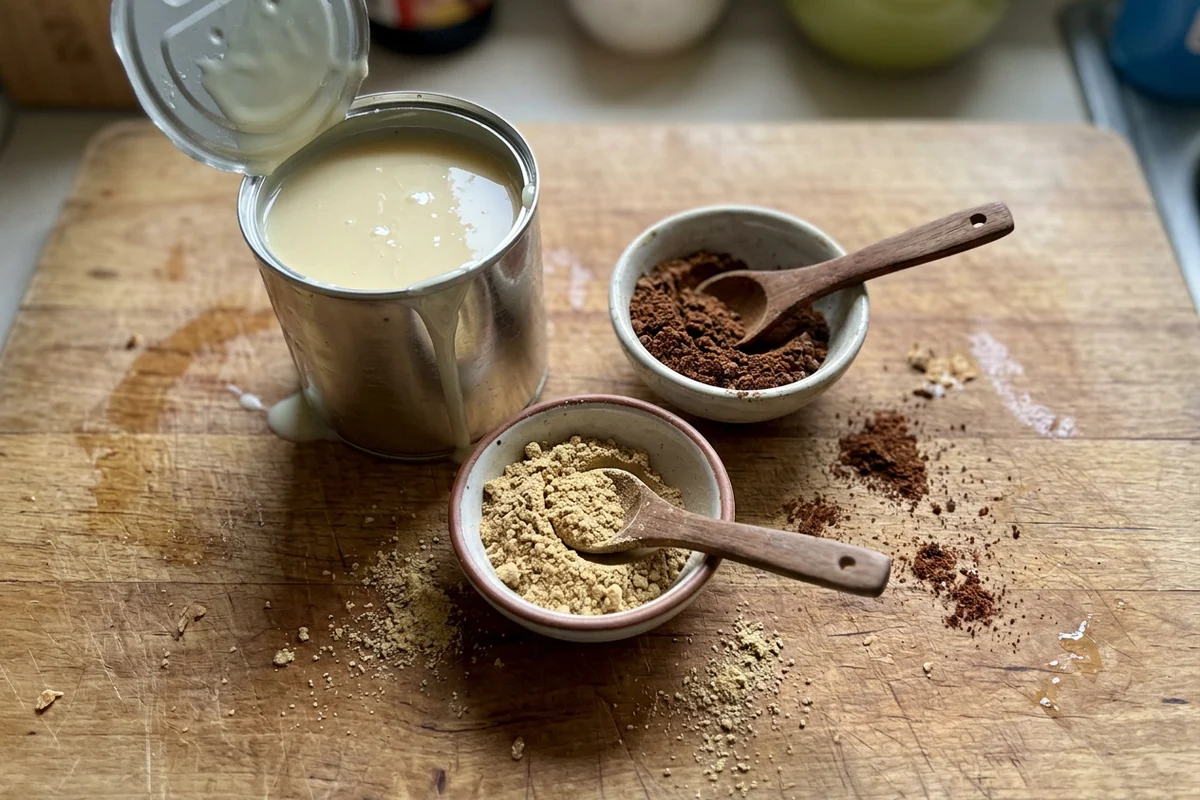
Boiling an unopened can of sweetened condensed milk slowly caramelizes the sugars inside, creating a thick and stable filling that will not run out of the cookies.
Chilling the dough before rolling prevents the butter from melting too quickly in the oven, ensuring the cookies maintain their fluted edges.
Dusting the top cookies with powdered sugar before assembly keeps the sugar off the sticky caramel centers for a cleaner presentation.
Ingredients for Gingerbread Linzer Cookies
• Sweetened condensed milk: Do not substitute evaporated milk. You need the high sugar content of condensed milk to create the caramel filling.
• Butter: Use unsalted butter so you can control the overall sodium level in the dough. Soften it at room temperature for smooth mixing.
• Brown sugar: Light brown sugar adds a mild molasses flavor that pairs well with the spices. Pack it firmly into the measuring cup.
• Spices: Check your ground ginger and cloves for freshness. Older spices lose their potency and will result in bland cookies.
• Salt: Standard table salt or fine sea salt works well here. You will use half in the dough and half to season the caramel filling.
Exact quantities are in the recipe card below.
How to Make Gingerbread Linzer Cookies
Step 1: Prepare the filling
The dulce de leche is made by simmering a sealed can of sweetened condensed milk for three hours. The can must remain fully submerged in boiling water the entire time to prevent it from bursting due to pressure.
Step 2: Mix the spiced dough
Cream the butter and brown sugar together until light. Blend in the flour and dry spices just until the dough comes together, then divide and chill it.

Step 3: Roll and cut the cookies
Roll the chilled dough on a floured surface. Cut out solid bases and matching tops with a cutout center, rerolling the scraps to use all the dough.
Step 4: Bake and assemble
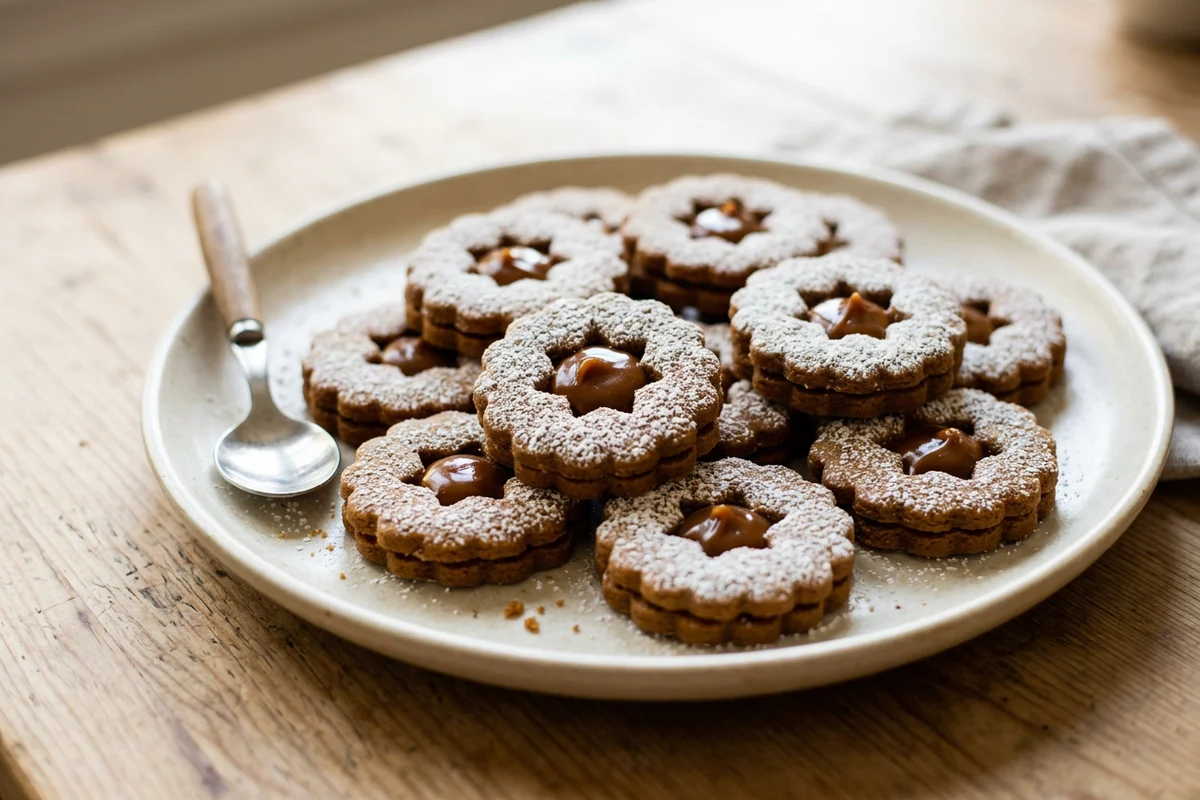
Bake the cookies until they are just set. Once they are completely cool, dust the top pieces with powdered sugar and sandwich them together with the homemade dulce de leche.
What to Serve with Gingerbread Linzer Cookies
Serve these sandwich cookies with a hot cup of black tea or coffee. They also pair well with a glass of cold milk.
Expert Tips for Gingerbread Linzer Cookies
Keeping the can of condensed milk completely submerged in water is a critical safety step to prevent it from bursting.
Store leftover dulce de leche in an airtight container in the refrigerator for up to two weeks.
If the dough becomes too warm while rolling and cutting, return it to the refrigerator for 10 minutes to firm up.
How to Store and Freeze Gingerbread Linzer Cookies
Store assembled cookies in an airtight container at room temperature for up to 3 days, or in the refrigerator for up to a week. The unbaked dough disks can be frozen for up to 3 months. Let the frozen dough thaw in the refrigerator overnight before rolling.
Gingerbread Linzer Cookies Recipe FAQs
Can I use store-bought dulce de leche?
Yes. You can buy canned or jarred dulce de leche in the baking aisle to save time. Look for a thick variety so it does not leak out of the cookies.
Why did my cookies spread in the oven?
The dough was likely too warm before baking. Make sure to chill the dough disks thoroughly, and put the cut cookies in the fridge for a few minutes if the kitchen is hot.
Can I use regular granulated sugar instead of brown sugar?
Brown sugar provides moisture and a slight chewiness. Granulated sugar will make the cookies crisper and alter the traditional gingerbread flavor.

Gingerbread Linzer Cookies
Ingredients
- 1 can sweetened condensed milk 14 oz / 397 g
- 1 cup unsalted butter softened, 227 g
- 1/2 cup packed light brown sugar 100 g
- 2 cups all-purpose flour 240 g
- 1 tablespoon ground ginger
- 2 teaspoons ground cinnamon
- 1/2 teaspoon ground nutmeg
- 1/4 teaspoon ground cloves
- 1 teaspoon salt divided
- 1/4 cup powdered sugar for dusting, 30 g
Instructions
- Remove the label from the can of sweetened condensed milk. Place the unopened can on its side in a large pot and cover it completely with water. Bring the water to a boil, then reduce the heat to a simmer. Cook for 3 hours, adding more hot water as needed to keep the can fully submerged at all times.
- Carefully remove the can from the water using tongs and let it cool to room temperature. Open the can, transfer the dulce de leche to a bowl, and stir in 1/2 teaspoon of the salt.
- In a large bowl, beat the softened butter and brown sugar together with an electric mixer until light and fluffy.
- In a separate bowl, whisk together the flour, ground ginger, cinnamon, nutmeg, cloves, and the remaining 1/2 teaspoon of salt. Add the dry mixture to the butter mixture and blend on low speed until a dough forms.
- Divide the dough in half and shape each portion into a flat disk. Wrap the disks tightly in plastic wrap and chill in the refrigerator for at least 30 minutes.
- Preheat your oven to 350°F (175°C). Line two large baking sheets with parchment paper.
- Roll one dough disk on a lightly floured surface to a 1/4-inch thickness. Cut out 3-inch circles using a fluted cookie cutter. Use a 1-inch cutter to remove the center of half of the circles. Reroll the scraps as needed. Repeat this process with the second disk of dough.
- Bake the cookies for 8 to 10 minutes, until the edges are set but the centers are still soft to the touch. Let them cool on the baking sheets for 10 minutes before moving them to a wire rack to cool completely.
- Dust the cookies with the cutout centers with powdered sugar. Spoon about 1 teaspoon of the cooled dulce de leche onto the center of each solid cookie, then place a powdered sugar cookie on top to form a sandwich.
Notes


